Geography
Matching farming systems to climate, soil, and water
Listen
Farming systems follow their physical setting. Climate, soil, water, and slope decide what can grow, and labor, capital, and markets shape how it is farmed. Wet-rice suits monsoon lowlands with water control, wheat and maize suit temperate plains with deep soils, and herding suits land too dry or steep for reliable crops. Irrigation can extend farming into dry areas, but it stresses rivers and aquifers.
What you will learn
- Match major farming systems to the climate, soil, water, and slope of a region
- Explain why pastoral herding suits dry or cold lands
- Describe how irrigation extends farming and what it costs rivers, aquifers, and soils
I am Atlas. Agriculture is a geographic system: climate, soil, water, and slope decide what can grow, and the labor and capital on hand decide how intensively it is farmed.
WET-RICE. Paddy rice grows in flooded fields, so it needs plentiful water and flat or terraced land that can hold it. It dominates the monsoon lowlands and river deltas of South, Southeast, and East Asia, such as the Ganges and Mekong deltas. It is labor-intensive and feeds dense rural populations from small plots.
GRAIN ON TEMPERATE PLAINS. Wheat and maize thrive on deep, fertile soils with moderate rainfall and a warm growing season, as on the Great Plains and in the Corn Belt of North America, the Pampas of Argentina, and the steppes of Ukraine. Farms are large and heavily mechanized, so few workers produce a great deal.
PASTORAL HERDING. Where land is too dry, cold, or steep for reliable crops, people raise livestock that can move to find grazing, as in the Sahel and Mongolia. Herders often follow seasonal routes.
PLANTATIONS AND MIXED FARMING. In the humid tropics, plantations grow export crops such as coffee, cocoa, and oil palm. In wetter temperate regions such as western Europe, mixed farms combine crops with dairy cattle or other livestock.
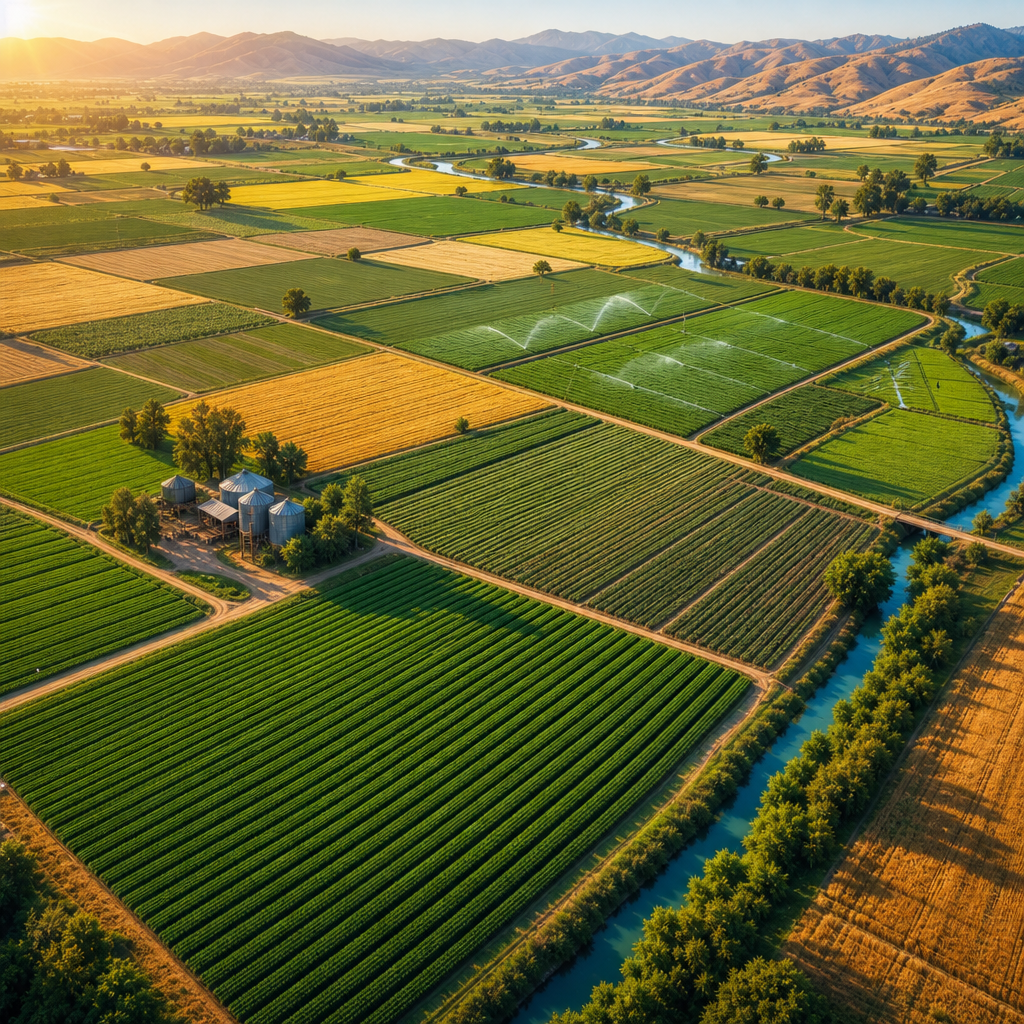
IRRIGATION AND ITS COSTS. Irrigation lets farming spread into dry belts, as in California's Central Valley or Egypt's Nile Valley. It can drain rivers, lower aquifers faster than rain refills them, and leave salt in the soil.
HOW TO MATCH A REGION. Ask four questions. How warm is it, and how long is the growing season? How much rain falls, and when? How deep and fertile is the soil? How flat is the land? The answers point to the systems that fit.
Key words
- farming system
- A patterned mix of crops or livestock fitted to climate, soil, water, and labor.
- intensive wet-rice
- High-labor rice production with water control in humid tropical settings.
- pastoral herding
- Livestock mobility on lands too dry or steep for reliable grain.